
Zirconia Bridges (The Modern Choice)
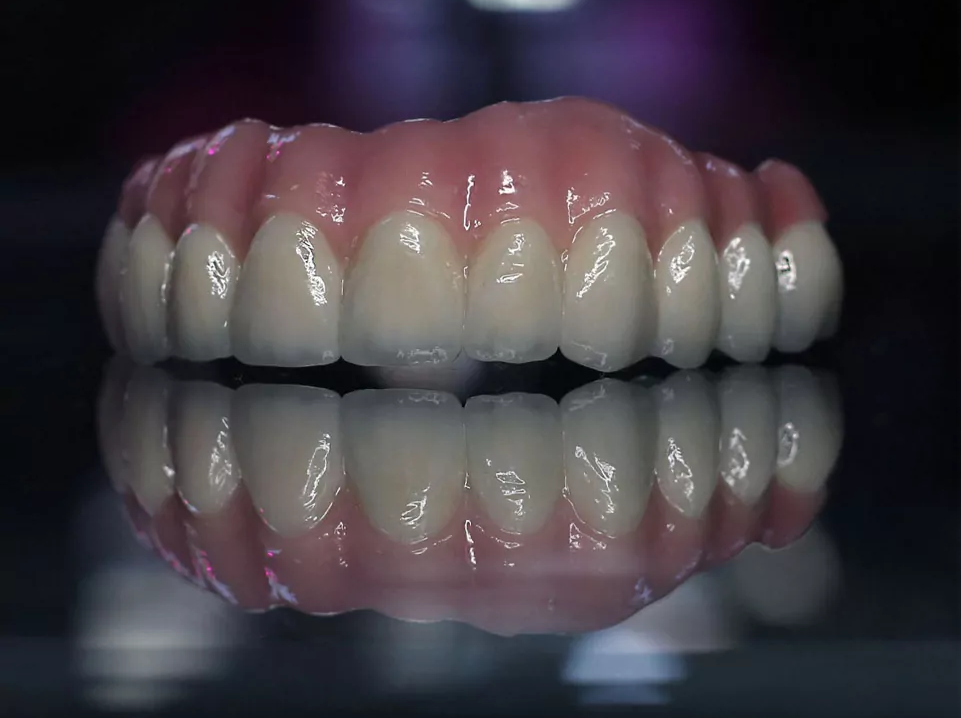
Utilizing advanced CAD/CAM digital design, our Zirconia bridges represent the latest in restorative technology. They are 100% metal-free, offering:
Superior Aesthetics: Highly translucent and color-stable, they perfectly simulate the look of natural enamel, with no risk of a dark line at the gumline.
Maximum Comfort: Zirconia is biocompatible and acts as a thermal insulator, reducing sensitivity to hot and cold.
Unmatched Strength: Milled from a solid block of ceramic, Zirconia is highly resistant to chipping and ideal for both front and back teeth.
Porcelain-Fused-to-Metal (PFM) Bridges (The Time-Tested Standard)
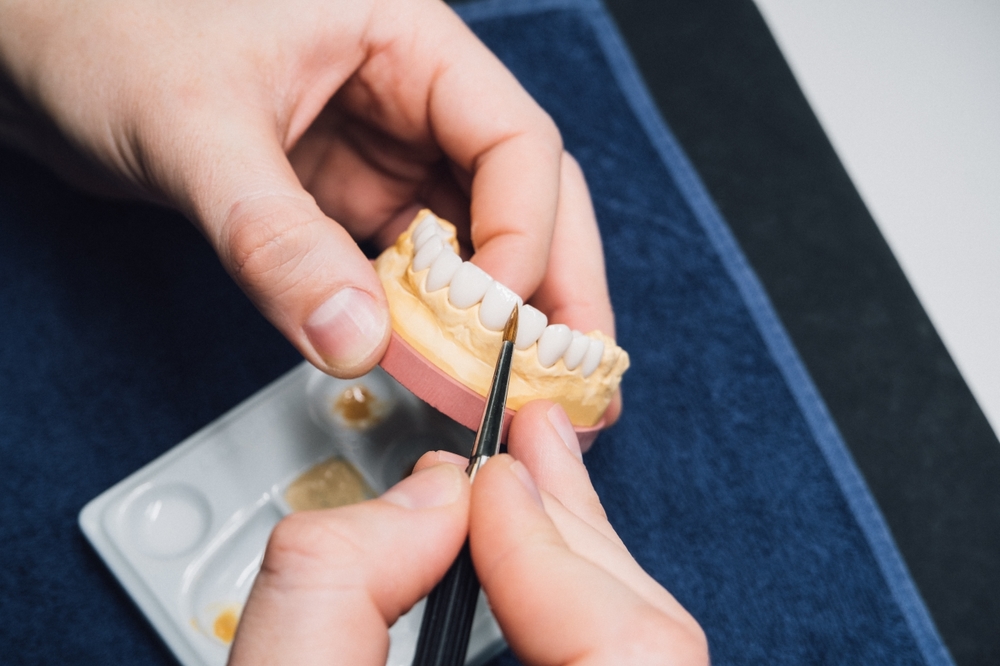
PFM bridges combine the durability of a metal alloy core with a tooth-colored porcelain exterior. This classic choice remains highly effective because it offers:
Proven Durability: The metal framework provides exceptional strength and stability, particularly for very long spans or in areas with limited vertical space.
Reliable Performance: PFM has decades of clinical success and is a trusted, cost-effective solution that provides both function and good aesthetics.
Fixed Prosthesis.
The fixed prosthesis is fixed to the pillar teeth by cementation and cannot be removed by the patient himself. Fixed prostheses include:
Crowns (which can be metal-porcelain, zircon-porcelain, palladium-porcelain, gold-porcelain). Sheaths are prosthesis for single teeth, where the root is stored. Anchored to prepared teeth (stump) or by endocanal screws to root (Richmond crown)
Bridges (as casings can be made of metal-porcelain, zircon-porcelain, palladium-porcelain, gold-porcelain). In bridges, the tooth that has been removed is replaced by a prosthesis containing the removed tooth and the teeth next to it, which are reduced to the monk being prosthetized. The missing tooth together with the pillar teeth form the bridge.
Implant prosthesis: in this case the missing tooth root is replaced with a titanium implant or biocompatible alloy and a fixed prosthesis is screwed or cemented on top.

Molded screw: is a type of metal screw which is prepared in the laboratory and placed at the root of the teeth. This screw gives the tooth more stability in case the tooth consists only of the root.
Removable Prostheses.
By “removable prosthesis” we mean all prostheses that can replace all or part of the jaw. They are called removable as they can be easily removed and washed by the patient. Removable prostheses are divided into:
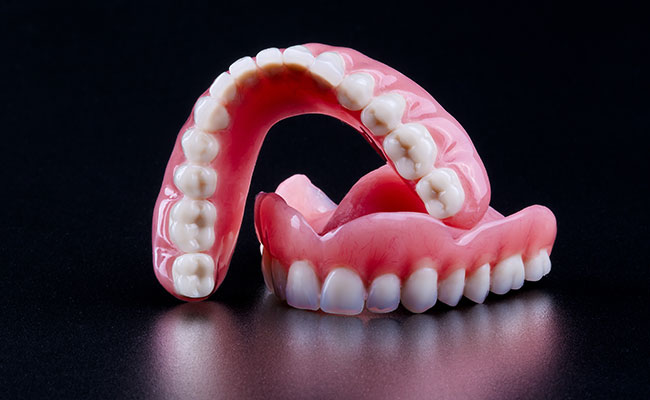
Total prosthesis: The total prosthesis is placed when the patient has no teeth in the oral cavity. It consists of a support structure with acrylic resin and resin teeth, which is held to the patient’s jaw. This prosthesis respects the patient’s profile and chewing functions. It is called total mobile as it can be removed by the patient and washed at any time of the day. To place this type of prosthesis the patient must have a certain amount of bone so that it stays in place naturally.
Partial prosthesis: The partial prosthesis is anchored to the remaining teeth with wire braces. It is composed of an acrylic resin structure and resin teeth.
Skeletal prosthesis: is a partial prosthesis with a metal support structure.
Skeleton prosthesis with attachment: is a mixed prosthesis which consists of pillar elements such as the teeth that are placed in the casing, a skeletal prosthesis with metal brackets, which make this type of prosthesis to be stable but also for the patient to be able to remove it and set it him/herself at any time of the day.
Frequently Asked Questions
How often should I visit the dentist?
What should I do in a dental emergency?
Do you offer services for kids?
What are my options for replacing missing teeth?
Is teeth whitening safe?
Ready to Book Your Appointment?
Contact us today to schedule your visit and take the first step toward a healthier smile.